

Mintoss / Lure fishing
Mangrove jack tides: where to fish as the water changes
I change my targets as the tide moves. Here is how I approach low-water structure, flooding mangrove edges, high-water cover and run-out drains.
I start with the water, then pick the structure. The spot that makes sense at dead low can be a completely different proposition once the mangroves flood.
Low water: work the structure that is still covered
At low tide, I look closely at isolated cover. With less water available, there are fewer places for bait and jacks to spread out. Rock bars, fallen timber, stumps, jetty poles and bridge structure are useful starting points.
I work the available cover thoroughly. A single log beside a deeper pocket deserves more attention than a long stretch of dry mangrove roots. I watch where the bait is holding and position myself for a controlled cast along that cover.
Rising water: follow the first push
My preferred window is the incoming tide, particularly when water first reaches ground that has been dry. Bait can move onto the flats and into the edges, and predators can follow.
I look for the first accessible mangrove pockets, shallow creek entrances and flooding flats, and keep checking the water level as I move. The aim is to stay with the newly covered edge, rather than keep fishing the same depth all morning.
High water: find an edge you can actually fish
At the top of a big tide, fish can move well beyond casting reach inside the mangroves. I change targets. High banks, undercuts, pontoons, walls and shaded man-made structure offer defined edges when the forest is flooded.
That is a change of plan, not a reason to force a lure into an unreachable tangle. I choose cover I can present to and retrieve from.
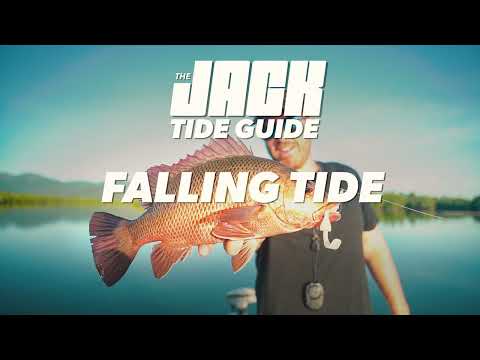
Falling water: watch the exits
As water leaves the mangroves, I look for drains, creek mouths and the low ends of flats. These concentrate the return flow. Nearby timber or rocks can give a jack somewhere to wait as bait moves past.
A simple session plan
- Pick two low-water structures before you launch.
- Identify a flat or mangrove edge that floods early.
- Have an accessible high-water option ready.
- Finish by checking a drain or creek exit on the run-out.
This is how I organise my search. Local tide height, current and bait activity still decide which of those options is worth fishing on the day.
Watch the demonstration
Sources
- Drew M — Jack Tide Guide — 00:00–04:43: structure and bait movement through the tide
- Mintoss — free fishing guide post — Caption retrieved from the connected Mintoss Instagram account
Mintoss lure options: The Mintoss Skip Frog is a buoyant soft plastic frog lure for close-cover presentations. The Mintoss Skip Prawn is a buoyant soft plastic prawn imitation designed for skip casting and different retrieves. Choose the profile and rig that lets you present cleanly to the structure available at that stage of the tide.
Put it into practice
Get your rig sorted, pick your water and make the next cast count.
Explore the lure range →